
As the core high school division event organized by the Mathematical Association of America (MAA), AMC12 is not only the gateway to the advanced mathematics competition AIME but also a strong academic credential for applying to STEM programs at top global universities. Facing the intense competition of the 2026 season, mastering scientific competition rules and preparation strategies is the key to standing out.
I. 2026 AMC12 Format and Scoring System Analysis
Key Dates
The 2026 AMC12 is divided into two versions, A and B. Both versions are similar in difficulty but feature different questions. Participants may choose either one or take both (the higher score will be used for awards and advancement):
Version A: Exam date: November 5. Registration deadline: October 26.
Version B: Exam date: November 13. Registration deadline: November 3.
It is recommended to secure your test seat as early as possible to avoid missing the exam due to capacity limits.
Scoring Mechanism and Strategy
The exam lasts 75 minutes and consists of 25 multiple-choice questions, with a total score of 150. Scoring rules are as follows:
Correct answer: +6 points
No answer: +1.5 points
Incorrect answer: 0 points
This unique scoring system means that "answering cautiously" is far more advantageous than "blind guessing." Making wise choices during the exam is the key to improving your score.
Difficulty Gradient and Award Thresholds
The exam difficulty follows a clear tiered distribution:
Questions 1–10: Foundational problems.
Questions 11–17: Intermediate-level discriminating problems.
Questions 18–25: Significantly more difficult; these are the core problems that separate top performers.
Based on historical data, the AIME qualification cutoff typically falls between 85–100 points. The top 5% globally (Honor Roll) generally requires 110–130 points, while the top 1% (Distinguished Honor Roll) often demands a score above 130.
II. Version A vs. Version B: How to Make the Optimal Choice?
Although Versions A and B are similar in difficulty, candidates can choose flexibly based on their personal circumstances:
Consider preparation time: If you are starting late and have limited time, Version A is recommended. Version A focuses more on fundamental mathematical applications and computational problem-solving, making it suitable for targeted intensive review. If you have ample preparation time, Version B offers more room to aim for a high score.
Consider mathematical foundation: Students with a solid foundation and a deep understanding of advanced problem-solving strategies may choose Version B to demonstrate their depth of thinking. Students with a relatively weaker foundation should start with Version A to build a steady base.
Consider exam objectives: If your goal is simply to gain competition experience or secure a baseline result, Version A is the safer choice. If your target is to qualify for AIME or compete for top rankings, Version B can better showcase your mathematical prowess.
III. Preparation Pitfall Guide and Scientific Planning
Two Common Misconceptions
Blind practice: AMC12 places a heavy emphasis on logical thinking. Practicing blindly without a systematic understanding of the knowledge framework is highly inefficient. You must first systematically learn the competition topics.
Neglecting time management: 25 questions in 75 minutes means an average of only 3 minutes per question. Without timed practice, it is easy to run out of time or experience a mental breakdown during the exam.
Five-Phase Preparation Plan
July (Foundation Building): Systematically review the core topics of the four major modules: Algebra, Geometry, Number Theory, and Combinatorics. Ensure zero errors on the first 10 questions and establish a solid knowledge framework.
August (Topic Breakthrough): Focus on the high-frequency intermediate-level question types from questions 11–17. Improve problem-solving speed through timed practice and maintain a high accuracy rate on questions 1–15.
September (Hard Problem Attack): Concentrate on breaking through the final problems (questions 18–25) and cross-module comprehensive questions. Train your ability to deconstruct complex problems and push toward the AIME qualification cutoff.
October (Mock Exam Score Boost): Take 2–3 timed full-length mock exams per week using past papers. Optimize time allocation and answer strategies, and complete registration and seat confirmation.
November (Final Sprint): Review your error log, memorize core formulas and key conclusions, maintain your problem-solving momentum, and adjust your exam mindset.
Tiered Goal Setting
Students at different levels should set differentiated goals:
Students with a weaker foundation: Prioritize securing the first 15 questions and aim for the AIME qualification cutoff.
Intermediate students: Address weaknesses in Number Theory and Combinatorics, with the goal of consistently earning awards.
High-scoring students: Focus on polishing the final problems and aim for the global top 1%.
We are an authorized AMC test center and offer free registration assistance!
Scan the code to inquire about AMC 12 registration for the 2026 season ⇓

Scan the QR code to get free AMC 12 prep resource pack
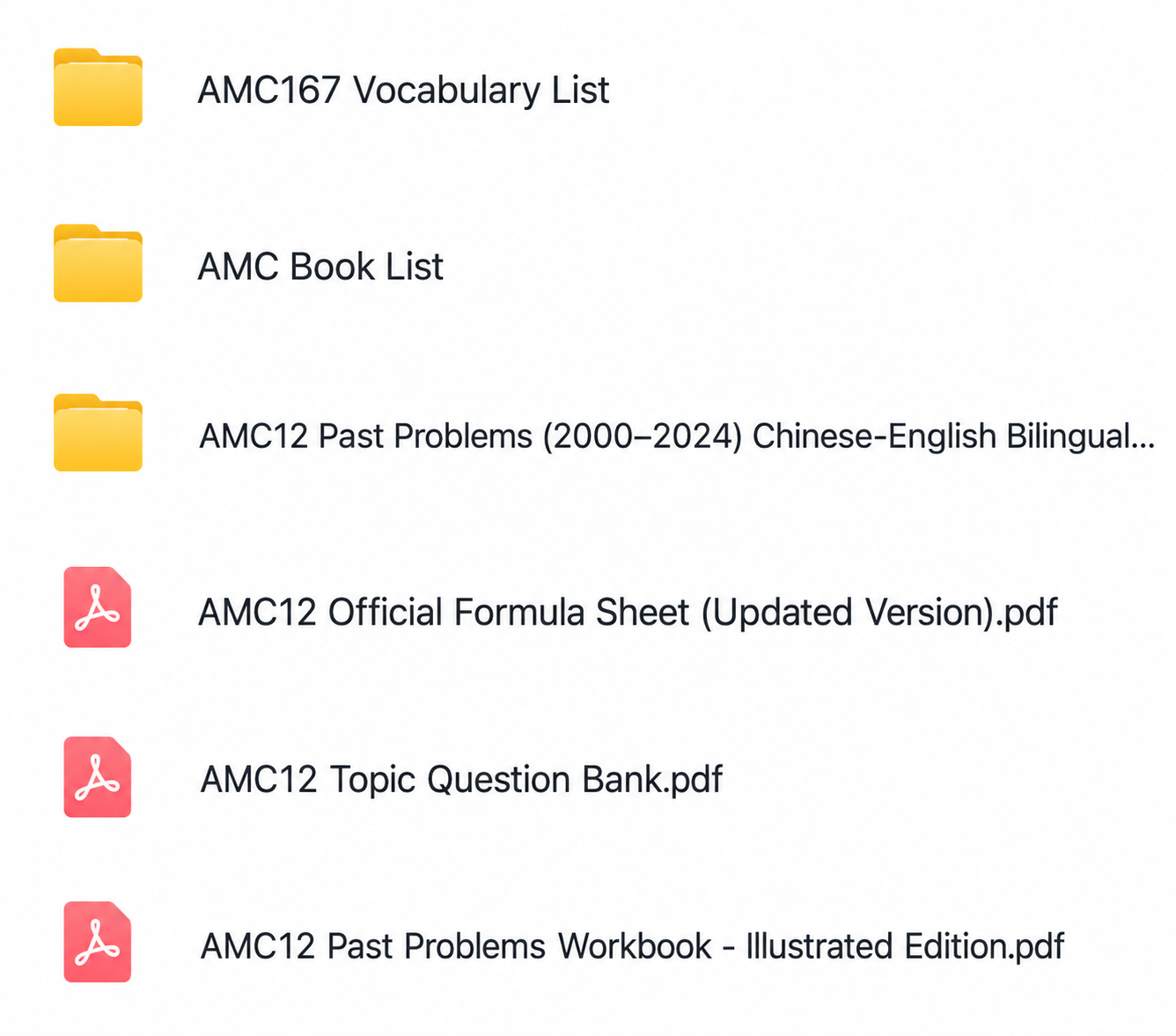
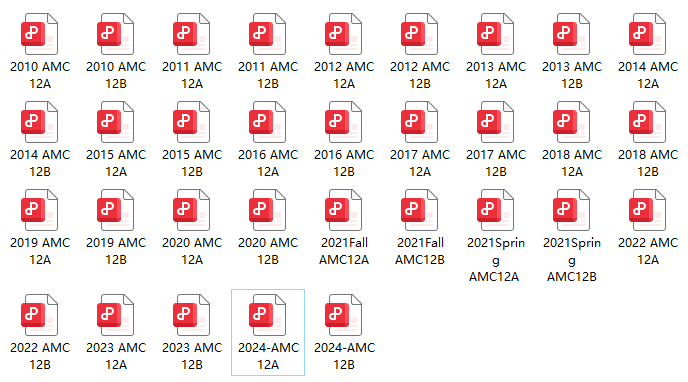
(Includes past AMC 12 exam papers with solutions, reading lists, formula sheets, and more)