
The American Mathematics Competition 12 (AMC 12) is one of the most prestigious and widely recognized mathematics competitions for high school students in the United States and around the world. Organized annually by the Mathematical Association of America (MAA), the AMC 12 challenges the brightest young minds with elegant, creative problems that test deep mathematical thinking rather than rote memorization. Whether you are a student aspiring to qualify for the AIME, a parent supporting a mathematically gifted child, or an educator guiding the next generation of problem solvers, this comprehensive guide covers everything you need to know about the AMC 12 for the 2025–2026 competition season.

What Is the AMC 12?
The AMC 12 is a 25-question, 75-minute multiple-choice examination in secondary school mathematics. It is the senior-level contest in a series of math competitions that also includes the AMC 8 (for students in grade 8 and below) and the AMC 10 (for students in grade 10 and below). The AMC 12 was first introduced in 1950 as the American High School Mathematics Examination (AHSME) and was renamed in 2000 when the MAA restructured the competition series into its current form.
The competition is designed to promote mathematical reasoning, creativity, and problem-solving ability. Problems span a wide range of topics typically covered in a high school mathematics curriculum, including algebra, geometry, number theory, combinatorics, probability, and trigonometry — notably without the use of calculus. What makes the AMC 12 special is its unique blend of accessibility and depth: while the first several problems can be solved by any student with a solid math foundation, the final questions are challenging enough to test even the most advanced competitors.
Eligibility and Registration
To be eligible for the AMC 12, a student must meet both of the following criteria as of the day of the competition:
Be in grade 12 or below.
Be under 19.5 years of age.
Importantly, students cannot register individually. All registrations must be processed through a school, an MAA-registered testing center, or an authorized online proctoring partner. This policy ensures the integrity of the competition and proper supervision during test administration. Schools and testing centers can register through the official MAA AMC Portal, which typically opens for registration in late August or early September each year.
International participation is warmly welcomed. Students outside the United States can take the AMC 12 through approved international testing centers, partner organizations, or designated online proctoring platforms in many regions — making the AMC 12 a truly global competition.
Exam Format and Scoring System
Understanding the format and scoring of the AMC 12 is crucial for developing an effective test-taking strategy.
| Feature | Details |
|---|---|
| Number of Questions | 25 multiple-choice questions |
| Duration | 75 minutes |
| Answer Choices | Five options per question (A, B, C, D, E) |
| Correct Answer | +6 points |
| Blank Answer | +1.5 points |
| Wrong Answer | 0 points |
| Maximum Score | 150 points |
| Calculators | Not permitted |
The scoring system rewards strategic thinking: guessing blindly can actually hurt your score if you could have left the question blank, since a blank answer earns 1.5 points while a random guess has an expected value of only about 1.2 points. However, if you can eliminate even one or two answer choices, the expected value of guessing increases significantly. This nuance is an important part of AMC 12 strategy that experienced competitors learn to exploit.
Questions are arranged in ascending order of difficulty. The first 10–12 questions are generally accessible to well-prepared students, questions 13–20 require deeper insight, and questions 21–25 are designed to separate the very top performers. This progressive difficulty structure allows students at all levels to find problems they can solve while being challenged by the hardest questions at the end.
AMC 12A and AMC 12B: Two Opportunities
Each year the AMC 12 is administered on two separate dates, commonly referred to as the AMC 12A and the AMC 12B. Both versions contain entirely different problems but are designed to be equal in difficulty and cover the same breadth of topics. Students may take both the 12A and 12B if they wish — and many do, since the two scores are considered independently, giving students two chances to qualify for the AIME.
The two administrations are typically scheduled about one week apart in early-to-mid November. For example, the AMC 12A has historically fallen on a Wednesday, with the AMC 12B on the following Thursday (or sometimes a few days to a week later). Each school or testing center may offer one or both administrations.
The Pathway to AIME and Beyond
The AMC 12 serves as the first step in a pipeline of increasingly selective mathematics competitions that ultimately leads to the International Mathematical Olympiad (IMO). Here is the pathway:
AMC 12 → AIME: Students who score 100 or higher (out of 150) or place in approximately the top 2.5% of all AMC 12 test-takers qualify for the American Invitational Mathematics Examination (AIME).
AIME → USA(J)MO: The AIME is a 15-question, 3-hour proof-based exam scored from 0 to 15. Combined with the AMC 12 score (using an AMC Index), top performers qualify for the USA Mathematical Olympiad (USAMO) or the USA Junior Mathematical Olympiad (USAJMO).
USA(J)MO → MOP: Top scorers at the USAMO are invited to the Mathematical Olympiad Program (MOP), an intensive training camp.
MOP → IMO Team: After a series of selection tests, six students are chosen to represent the United States at the International Mathematical Olympiad.
Even for students who do not pursue the full pipeline, a strong AMC 12 score is a valuable achievement that is recognized by top universities, including MIT, Stanford, Caltech, and the Ivy League schools, as evidence of exceptional mathematical ability.
2025–2026 Key Dates (Expected)
While the MAA finalizes and publishes exact dates each spring, based on historical patterns the 2025–2026 competition season is expected to follow this timeline:
Late August – Early September 2025: MAA AMC Portal opens for school and testing center registration.
Mid-to-Late October 2025: Standard registration deadline; late registration becomes available (with additional fees).
Early-to-Mid November 2025: AMC 12A and AMC 12B administration dates.
Early February 2026: AIME I administration.
Mid-February 2026: AIME II administration.
March 2026: USAMO and USAJMO for qualified students.
Students should check the official MAA website (amc.maa.org) and consult with their school’s AMC coordinator for the most accurate and up-to-date information.
Effective Preparation Strategies
Success on the AMC 12 requires more than just knowing high school math — it requires the ability to think creatively under time pressure. Here are proven strategies used by top scorers:
1. Master the Fundamentals First
Before tackling competition-level problems, ensure you have a rock-solid understanding of core topics: algebraic manipulation, functions and their graphs, coordinate and Euclidean geometry, basic number theory (divisibility, modular arithmetic, primes), counting and probability, and trigonometric identities. The AMC 12 does not require calculus, so focus your energy where it counts.
2. Practice with Past Exams
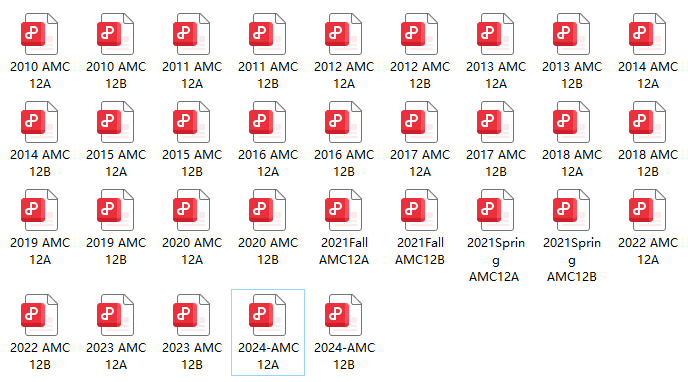
The single most effective preparation method is working through past AMC 12 exams under timed conditions. The MAA makes many years of past contests available, and working through them helps you become familiar with the style, pacing, and difficulty progression of the exam. Aim to complete at least 5–10 full past exams before competition day.
3. Learn to Skip Strategically
With 75 minutes for 25 questions, you have an average of 3 minutes per question. However, the questions are not equally difficult. A smart strategy is to move quickly through the easier problems (Questions 1–15) to save time for the harder ones. If you’re stuck on a problem for more than 4 minutes, move on and return to it if time permits.
4. Study Common Problem-Solving Techniques
Familiarize yourself with strategies such as casework, complementary counting, the Pigeonhole Principle, Vieta’s formulas, coordinate bashing, back-solving from answer choices, and plugging in values. Many AMC problems have elegant solutions once you recognize the right approach, but some can also be solved by systematic (if tedious) computation.
5. Review Your Mistakes
After each practice test, carefully review every problem you got wrong or guessed on. Understand not just the correct answer but why your initial approach failed. This reflective practice is where the most significant improvement occurs.
Recommended Resources
Art of Problem Solving (AoPS): The gold standard for AMC preparation. Their textbooks — particularly The Art of Problem Solving, Vol. 1 (for AMC 10/12 basics) and Vol. 2 (for more advanced material) — are indispensable. AoPS also offers online courses, an active community forum, and the Alcumus free adaptive learning system.
MAA’s Official Past Contests: Available through the AMC website and in published compilations.
Introduction to Algebra, Introduction to Counting & Probability, Introduction to Number Theory, and Introduction to Geometry by Richard Rusczyk: Foundational AoPS texts that build competition math skills from the ground up.
Intermediate Algebra, Intermediate Counting & Probability, and Precalculus by AoPS: For students aiming for top scores (120+) on the AMC 12.
Online Platforms: Brilliant.org, Mathcounts training materials, and the AoPS Community Forum are all excellent supplementary resources.
MATHCOUNTS and AMC 10 Materials: Don’t overlook problems from these easier competitions — they build the foundation needed for AMC 12 success.
Why the AMC 12 Matters
Beyond the trophies and qualification milestones, the AMC 12 offers lasting benefits:
College Applications: A high AMC 12 score — and especially AIME or USAMO qualification — is a powerful differentiator on college applications. Top STEM programs actively look for evidence of mathematical talent, and competition achievements provide objective, nationally recognized validation.
Problem-Solving Skills: The creative thinking habits developed through AMC preparation transfer to every area of mathematics, computer science, engineering, and beyond.
Confidence and Community: Competing alongside thousands of like-minded peers across the country and around the world builds confidence and connects students to a vibrant community of young mathematicians.
A Stepping Stone: For students who fall in love with competition math, the AMC 12 is the gateway to a rich journey through AIME, USAMO, MOP, and potentially the IMO — experiences that shape careers and lives.
Final Thoughts
The AMC 12 is more than just a test — it is a celebration of mathematical creativity and intellectual courage. Whether your goal is to qualify for the AIME, earn a Distinguished Honor Roll certificate, or simply challenge yourself with beautiful problems, the journey of preparing for the AMC 12 will make you a stronger and more creative thinker.
The 2025–2026 season is fast approaching. Start your preparation early, practice consistently, and remember: every expert was once a beginner who didn’t give up. Good luck, and enjoy the journey!
For official information, registration details, and the most up-to-date dates, always refer to the MAA’s official AMC website at amc.maa.org.